A leaking roof can quickly become a concern for any homeowner. What may begin as a small damp patch or occasional drip can indicate that water is entering through a damaged or vulnerable part of the roofing system. If the underlying problem is not addressed, continued water ingress can affect materials beneath the roof.
For homeowners in Hook, Hampshire, understanding the common causes of roof leaks and recognising the warning signs can help ensure problems are dealt with promptly.
Common Causes of Roof Leaks
Roof leaks can develop for several reasons. Some are caused by damage to the main roof covering, while others occur around areas where different roofing materials meet.
Common causes include:
- Cracked, broken or slipped tiles
- Damaged roof slates
- Deteriorated flashing
- Defective roof valleys
- Blocked or damaged guttering
- Problems around chimneys
- Deteriorating roof coverings
- Gaps around roof penetrations
Finding the actual source of the leak is important because water may travel beneath the roof covering before becoming visible inside the property.
Damaged or Slipped Roof Tiles
Roof tiles can become damaged or displaced due to weather exposure, impact or deterioration of fixings. A missing or cracked tile can create an opening that allows rainwater to reach the layers beneath.
A slipped tile should be inspected rather than simply repositioned. The surrounding tiles and fixings may also need checking to determine why the movement occurred.
Replacing damaged components promptly can help restore the protective covering of the roof.
Deteriorated Roof Flashing
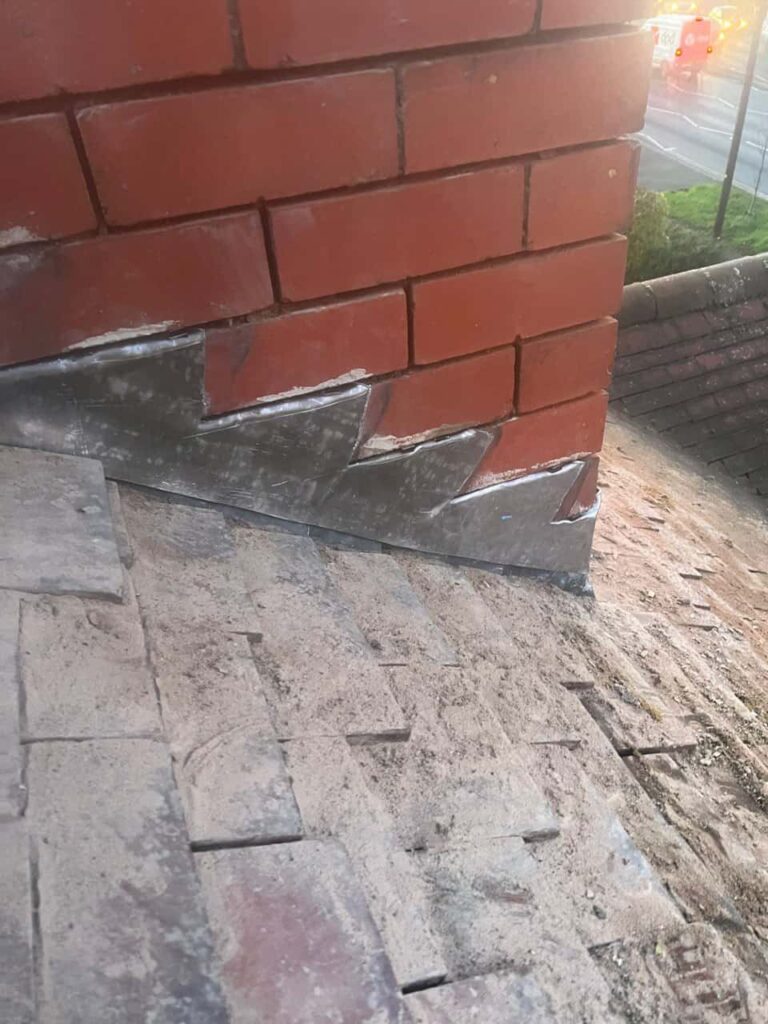
Flashing is commonly used around chimneys, roof junctions and other areas where water could potentially enter. Over time, flashing can crack, lift or become separated from adjacent surfaces.
Small gaps can allow rainwater to penetrate beneath the roofing materials. Because water can travel along timber and other surfaces, dampness inside the property may appear some distance from the actual defect.
Professional inspection can help establish whether damaged flashing is responsible for the leak.
Problems Around Chimneys and Roof Junctions
Chimneys and roof junctions are particularly important when investigating water ingress. Deteriorated mortar, damaged flashing or gaps around the junction can create routes for rainwater.
Roof valleys can also become vulnerable when materials deteriorate or debris prevents water from flowing correctly.
These areas should be assessed carefully as part of a leak investigation rather than assuming the first visible damp patch identifies the source.
Blocked or Damaged Guttering
Guttering helps direct rainwater away from the roof and walls. When gutters become blocked with leaves, moss or other debris, water may overflow and run against areas of the building that are not designed to handle persistent water flow.
Loose joints, cracks and damaged sections can cause similar problems.
Keeping gutters clear and checking for visible defects can help maintain effective rainwater drainage and reduce the risk of water-related problems.
Signs That Your Roof May Be Leaking
Not every roof leak begins with obvious dripping water. Warning signs can include:
- Brown or damp patches on ceilings
- Water marks around walls
- Damp insulation in the loft
- Mould or persistent musty smells
- Dripping during or after rainfall
- Missing or displaced roof tiles
- Visible gaps or daylight through the roof
If these signs appear, the roof should be assessed to identify the underlying cause.
Why Prompt Roof Leak Repairs Matter
Continued water ingress can gradually affect roofing materials and the structure beneath them. Persistent moisture may contribute to deterioration of timber, insulation and other components.
Simply covering an internal stain does not resolve the source of the problem. The entry point needs to be identified and repaired to prevent further water from reaching the affected area.
Prompt professional attention can also help determine whether surrounding sections of the roof have been affected.
How to Help Prevent Further Roof Damage
Regular maintenance can help identify potential problems before they develop into significant leaks. Homeowners can:
- Look for visibly damaged or displaced tiles
- Keep gutters and drainage routes clear
- Check visible flashing for signs of deterioration
- Inspect the loft for dampness or water marks
- Arrange an inspection when recurring problems appear
- Address small roofing defects rather than allowing them to deteriorate
Roof-level inspections should be carried out safely, as accessing a roof without appropriate equipment can create additional risks.
Professional Roof Leak Repairs in Hook
MCM Roofing Repairs Hook provides professional roof leak repair services in Hook, Hampshire. Roofs can be assessed for damaged tiles, defective flashing, guttering problems, chimney-related defects and other potential sources of water ingress.
Once the cause has been identified, repairs can be focused on the affected area and the underlying problem.
If you have noticed signs of a leaking roof at your property in Hook, Hampshire, contact MCM Roofing Repairs Hook to discuss your requirements and arrange an inspection.
Conclusion
Roof leaks can result from damaged tiles, deteriorated flashing, chimney problems, blocked guttering and defects around other vulnerable areas. Even a small leak can allow water to enter repeatedly, making prompt attention important.
For homeowners in Hook, Hampshire, recognising early warning signs and arranging professional roof leak repairs can help address the underlying problem and limit further deterioration. Regular maintenance and timely inspections can also help keep the roofing system in good condition.
Call us on: 01256 648 399
Click here to find out more about MCM Roofing Repairs Hook
Click here to complete our contact form and see how we can help with your roofing needs.